

Take Care of Your Health
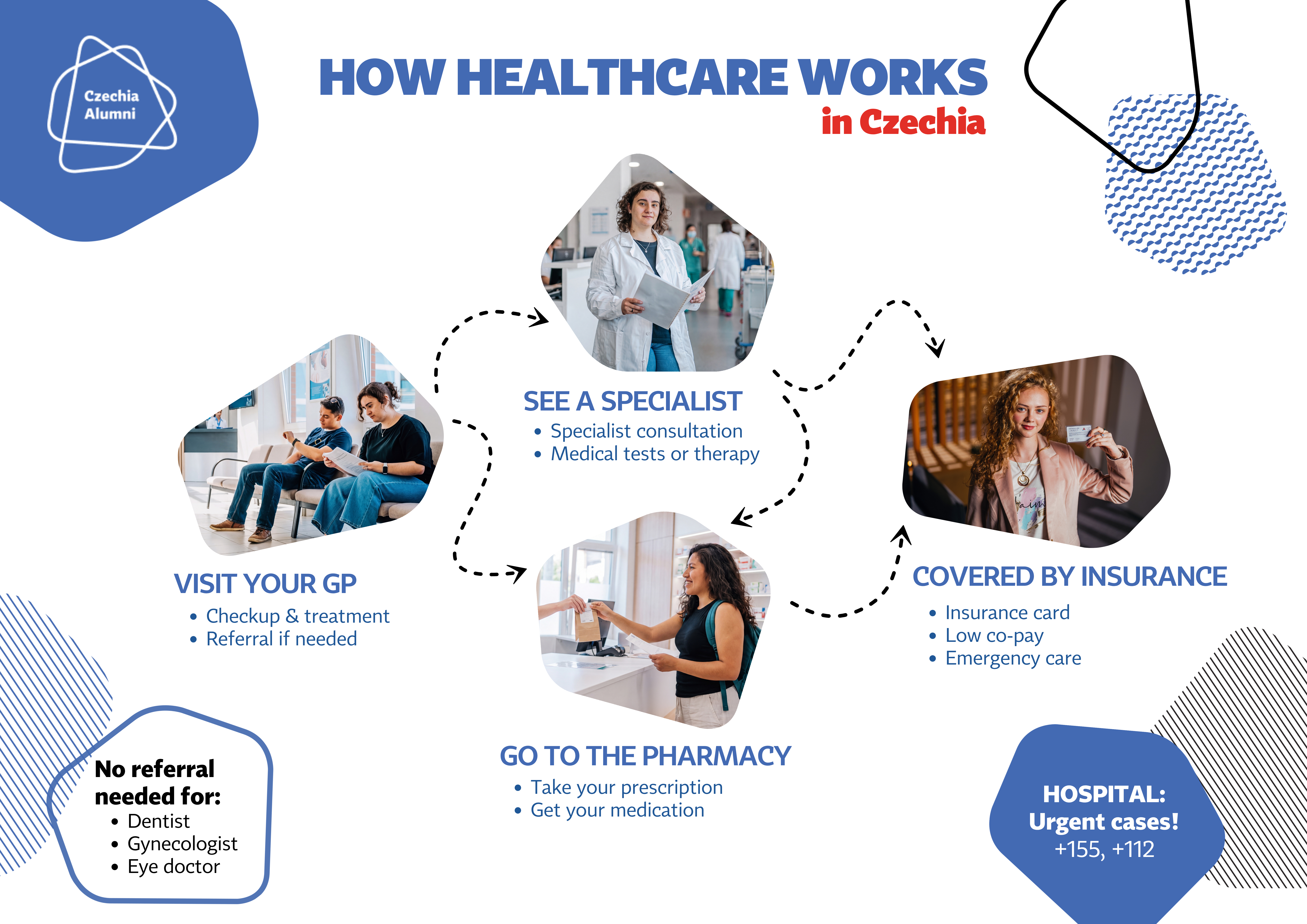
Whether you stay in Czechia after graduation or return later, it is important to understand how healthcare coverage works. Czechia has a strong public health insurance system that provides access to a wide range of medical services. In most cases, people working in Czechia are automatically covered through their employer.


Keep in Mind
If you need private health insurance for your stay in Czechia, make sure it is comprehensive commercial health insurance. Not all private insurance products meet the legal requirements for residence, even if they are cheaper.
If you stay in Czechia after graduation
While you were a student, your insurance was either covered by the state or arranged and paid by you, depending on your study type and personal situation. After graduation, what happens next depends mainly on whether you start working straight away or stay in Czechia without a job for some time.
If you start working
If you start working
If you start working in Czechia, your health insurance is usually handled through your employer. In most cases:
- your employer will register you with a public health insurance provider,
- monthly contributions will be deducted from your salary,
- you will receive a health insurance card,
- you will have access to the public healthcare system.
This is the most common situation for graduates who start a standard job after finishing their studies.
If you are not working yet
If you are not working yet
If you stay in Czechia after graduation but do not start working immediately, you need to make sure your health insurance remains valid.
Depending on your residence status and personal situation, you may need to:
- arrange private health insurance,
- pay insurance contributions yourself,
- check what type of coverage applies during the period after graduation.
Do not assume your student insurance continues automatically for an unlimited time.
If you start working
If you start working in Czechia, your health insurance is usually handled through your employer. In most cases:
- your employer will register you with a public health insurance provider,
- monthly contributions will be deducted from your salary,
- you will receive a health insurance card,
- you will have access to the public healthcare system.
This is the most common situation for graduates who start a standard job after finishing their studies.
If you are not working yet
If you stay in Czechia after graduation but do not start working immediately, you need to make sure your health insurance remains valid.
Depending on your residence status and personal situation, you may need to:
- arrange private health insurance,
- pay insurance contributions yourself,
- check what type of coverage applies during the period after graduation.
Do not assume your student insurance continues automatically for an unlimited time.
Good to Know
Your student health insurance usually does not end on graduation day. It typically remains valid until the end date of your insurance contract or your current residence validity. Even so, it is important to check what happens next and make sure there is no gap in coverage.
What Public Health Insurance Covers
Public health insurance in Czechia typically includes:
- visits to general practitioners and specialists,
- hospital treatment,
- emergency medical care,
- many prescribed medications (partially covered).
You usually choose a general practitioner (GP) who becomes your primary doctor. If you cannot find a GP who accepts new patients, your health insurance provider is responsible for helping you find one. If you need help, you can reach out to ICP or fill in this form (available in Czech, Ukrainian and Russian only).
! Some services, medicines, or private clinics may involve extra costs, so it is always worth checking in advance.
Emergency care
Emergency care
Emergency medical care is available throughout the country.
Emergency numbers in Czechia:
- 155 : Medical emergency
- 112 : European emergency number
Hospitals provide urgent treatment regardless of insurance status, but insurance may affect later payment.
Czechia has a free mobile app called Záchranka, which can help you contact emergency services quickly. You can call emergency medical services with one button, and it automatically sends your exact GPS location to rescuers. The app is available in English and works throughout Czechia. It can be downloaded for iOS and Android.
Prescriptions, pharmacies and costs
Prescriptions, pharmacies and costs
Prescriptions in Czechia are usually issued electronically through the eRecept system. After visiting a doctor, you will typically receive a code by SMS or on paper, which you can show at any pharmacy to collect your medication.
Pharmacies are widely available across the country and pharmacists can also help with basic medical advice and over-the-counter medicines. Most healthcare services and medicines in Czechia are covered through public health insurance. However, some services and medications may require small co-payments, depending on the treatment or prescription.
Private clinics or services outside the public system may charge additional fees. It is always a good idea to check with your doctor or pharmacy if any payment will be required.
Mental health support
Mental health support
Mental health care is available in Czechia through both the public healthcare system and private providers. If you are experiencing mental health difficulties, your general practitioner (GP) can often help you find appropriate support or refer you to a specialist.
Who to turn to:
English-speaking therapists
In larger cities such as Prague, Brno, and Ostrava, it is possible to find psychologists and therapists who offer counselling in English. Many private clinics and therapy centres provide services specifically for international clients.
University counselling centres
Many universities offer free or low-cost psychological counselling for students and recent graduates. These services are usually confidential and may include individual consultations, workshops, or short-term therapy.
Crisis lines
Several organisations operate 24/7 crisis helplines that provide immediate psychological support. These services can help people experiencing emotional distress, anxiety, or urgent mental health concerns.
- Mental Health First Aid Line
Phone: 116 123 - Victim Support Line
Phone: 116 006 - Crisis Line for Young People
Phone: 116 111
Tip: Some Czech health insurance providers contribute to psychotherapy sessions. E.g. VZP is offering up to CZK 5,000 contribution towards up to 10 sessions with psychotherapists/counsellors working in private sector.
Preventive care
Preventive care
Preventive care is an important part of the Czech healthcare system. If you are covered by public health insurance, many regular preventive check-ups are fully covered. Typical preventive services include:
- Regular check-ups with your general practitioner (GP): usually once every two years,
- Dental check-ups: typically recommended once a year,
- Preventive screenings depending on age and health risks (for example blood pressure, cholesterol or cancer screenings),
- Vaccinations, including seasonal flu vaccines or recommended travel vaccines.
Your GP can advise you on which preventive examinations are recommended for your age and health situation.
Tip: Check your insurance company benefit programmes
Attending preventive check-ups is not only useful for detecting potential health issues early, but many health insurance providers in Czechia also offer special benefits and bonuses for people who regularly attend preventive care. These can include contributions towards dental care, vaccinations, sports activities, physiotherapy or other health-related services.
Emergency care
Emergency medical care is available throughout the country.
Emergency numbers in Czechia:
- 155 : Medical emergency
- 112 : European emergency number
Hospitals provide urgent treatment regardless of insurance status, but insurance may affect later payment.
Czechia has a free mobile app called Záchranka, which can help you contact emergency services quickly. You can call emergency medical services with one button, and it automatically sends your exact GPS location to rescuers. The app is available in English and works throughout Czechia. It can be downloaded for iOS and Android.
Prescriptions, pharmacies and costs
Prescriptions in Czechia are usually issued electronically through the eRecept system. After visiting a doctor, you will typically receive a code by SMS or on paper, which you can show at any pharmacy to collect your medication.
Pharmacies are widely available across the country and pharmacists can also help with basic medical advice and over-the-counter medicines. Most healthcare services and medicines in Czechia are covered through public health insurance. However, some services and medications may require small co-payments, depending on the treatment or prescription.
Private clinics or services outside the public system may charge additional fees. It is always a good idea to check with your doctor or pharmacy if any payment will be required.
Mental health support
Mental health care is available in Czechia through both the public healthcare system and private providers. If you are experiencing mental health difficulties, your general practitioner (GP) can often help you find appropriate support or refer you to a specialist.
Who to turn to:
English-speaking therapists
In larger cities such as Prague, Brno, and Ostrava, it is possible to find psychologists and therapists who offer counselling in English. Many private clinics and therapy centres provide services specifically for international clients.
University counselling centres
Many universities offer free or low-cost psychological counselling for students and recent graduates. These services are usually confidential and may include individual consultations, workshops, or short-term therapy.
Crisis lines
Several organisations operate 24/7 crisis helplines that provide immediate psychological support. These services can help people experiencing emotional distress, anxiety, or urgent mental health concerns.
- Mental Health First Aid Line
Phone: 116 123 - Victim Support Line
Phone: 116 006 - Crisis Line for Young People
Phone: 116 111
Tip: Some Czech health insurance providers contribute to psychotherapy sessions. E.g. VZP is offering up to CZK 5,000 contribution towards up to 10 sessions with psychotherapists/counsellors working in private sector.
Preventive care
Preventive care is an important part of the Czech healthcare system. If you are covered by public health insurance, many regular preventive check-ups are fully covered. Typical preventive services include:
- Regular check-ups with your general practitioner (GP): usually once every two years,
- Dental check-ups: typically recommended once a year,
- Preventive screenings depending on age and health risks (for example blood pressure, cholesterol or cancer screenings),
- Vaccinations, including seasonal flu vaccines or recommended travel vaccines.
Your GP can advise you on which preventive examinations are recommended for your age and health situation.
Tip: Check your insurance company benefit programmes
Attending preventive check-ups is not only useful for detecting potential health issues early, but many health insurance providers in Czechia also offer special benefits and bonuses for people who regularly attend preventive care. These can include contributions towards dental care, vaccinations, sports activities, physiotherapy or other health-related services.
FAQs

What if there is a gap between graduation and my first job? Info
If you stay in Czechia after graduation but do not start working immediately, you need to check how your health insurance will be covered during that period. Do not assume that your student arrangement will continue automatically. Depending on your situation, you may need private insurance or another form of coverage. It is important to avoid a gap in insurance.
Do I still have health insurance after graduation? Info
Not automatically. Your student health insurance arrangement may change once your studies end. If you stay in Czechia, you must ensure that you have valid health insurance, either through employment, private insurance, or by paying contributions yourself.
What happens to my health insurance if I start working in Czechia? Info
If you are employed in Czechia, your employer will usually register you with a public health insurance provider. Contributions are then automatically paid through your salary.
What if I return to Czechia later to work? Info
If you return and start a job in Czechia, your employer will again register you for public health insurance. Coverage typically begins from the start of your employment.
Do I need to choose a doctor? Info
Yes. Most people register with a general practitioner (GP) who becomes their main doctor and can refer them to specialists if needed.
Can I visit any doctor in Czechia? Info
You should usually visit doctors who work with your health insurance provider if you want the visit to be covered within the public system. Many doctors list the insurance providers they accept on their website or clinic profile.
Is healthcare free in Czechia? Info
If you have public health insurance, most services in the public system are covered, although some medicines or specialised services may involve small extra costs. If you have private commercial health insurance, you may often need to pay for care first and then request reimbursement later. Many doctors do not work directly with commercial insurers, so it is important to check your policy and follow your insurer’s instructions in advance.
Can I find English speaking doctors in Czechia? Info
In larger cities such as Prague, Brno, and Ostrava, more clinics nowadays offer services in English. However, this is way less common in smaller towns.
Do I need a referral to see a specialist? Info
In many cases, yes. In Czechia, patients usually first visit their general practitioner (GP), who evaluates the problem and may issue a referral (“žádanka”) to a specialist (for example a dermatologist, neurologist, or cardiologist).
This referral is often required for the visit to be covered by public health insurance.
Some specialists, such as dentists, gynaecologists, and ophthalmologists, can usually be visited without a referral.
Can I go directly to a hospital instead of a GP? Info
Hospitals are mainly for urgent or specialised care. For common health issues, it is usually better to visit your GP first.
Do I have to pay when visiting a doctor? Info
If you are covered by public health insurance, most services in the public healthcare system are covered. However, you may still need to pay extra for some medicines, specific examinations, or services that are not fully covered.
If you have private commercial health insurance, the rules depend on your insurance policy. In that case, always check with your insurance provider which doctors, treatments, and costs are covered, and follow their instructions before visiting a healthcare provider.
How do prescriptions work in Czechia? Info
Doctors usually issue electronic prescriptions (eRecept). Instead of a paper prescription, you typically receive:
-
an SMS with a code, or
-
a printed prescription code
You can show this code at any pharmacy to receive your medication.
Some medicines are fully covered by insurance, while others require a small co-payment.
What is the difference between public & private health insurance? Info
Public health insurance is the main healthcare system in Czechia. Most people who live and work in the country are covered by it.
Private health insurance is usually used by foreign nationals who are are not eligible to enter the public system.
What if I change jobs? Info
If you change jobs in Czechia, it is important to check that your health insurance coverage continues without interruption. In many standard employment situations, your new employer will register you again, but you should still confirm the timing and make sure there is no gap between the end of one job and the start of the next.