

Manage Your Money
Once you start working or planning a longer stay in Czechia, everyday financial questions become more important; from banking and taxes to loans or mortgages. This page will not replace professional financial or tax advice, but it can help you understand the basics, ask better questions, and avoid common mistakes.
Banking in Czechia
For many international alumni, a Czech bank account becomes useful quite quickly. It can make everyday life easier if you:
- receive salary in CZK,
- pay rent and utilities in Czechia,
- use local payment services,
- or plan to stay longer.
In many cases, employers also expect you to provide a local account for salary payments, although this can depend on the company.
Opening a Bank Account
What do you need from the start
What do you need from the start
Opening a basic account in Czechia is usually straightforward, but the exact process depends on the bank and your situation. Banks often ask for:
- proof of identity,
- proof of residence or address,
- and sometimes proof of study, work, or legal stay.
This process may be easier for you if you already have
- Czech address,
- residence document,
- job contract or proof of income,
- and a Czech phone number.
Some banks are more used to international clients than others. In practice, the experience can vary quite a lot depending on the branch, the city, and the staff you speak with.
What to compare
What to compare
Not all accounts are the same. Before choosing a bank, it helps to look at:
- monthly account fees,
- ATM access,
- foreign payments and exchange rates,
- internet and mobile banking in English,
- customer support,
- and whether the bank is easy to use for everyday life in Czechia.
As an international, it is also worth checking whether the bank works well for life between Czechia and another country. This can matter if you still receive money from abroad, support family members, or expect to move money internationally. In that case, exchange rates, foreign transfers, and English-language support may matter just as much as the basic account fee.
What to focus on
What to focus on
It is worth checking how the bank communicates. Some banks offer:
- online banking in English,
- English-speaking customer support,
- or easier onboarding for foreigners.
Others may be less comfortable for international clients, even if the basic product looks similar on paper.
What do you need from the start
Opening a basic account in Czechia is usually straightforward, but the exact process depends on the bank and your situation. Banks often ask for:
- proof of identity,
- proof of residence or address,
- and sometimes proof of study, work, or legal stay.
This process may be easier for you if you already have
- Czech address,
- residence document,
- job contract or proof of income,
- and a Czech phone number.
Some banks are more used to international clients than others. In practice, the experience can vary quite a lot depending on the branch, the city, and the staff you speak with.
What to compare
Not all accounts are the same. Before choosing a bank, it helps to look at:
- monthly account fees,
- ATM access,
- foreign payments and exchange rates,
- internet and mobile banking in English,
- customer support,
- and whether the bank is easy to use for everyday life in Czechia.
As an international, it is also worth checking whether the bank works well for life between Czechia and another country. This can matter if you still receive money from abroad, support family members, or expect to move money internationally. In that case, exchange rates, foreign transfers, and English-language support may matter just as much as the basic account fee.
What to focus on
It is worth checking how the bank communicates. Some banks offer:
- online banking in English,
- English-speaking customer support,
- or easier onboarding for foreigners.
Others may be less comfortable for international clients, even if the basic product looks similar on paper.
Loans in Czechia
Loans in Czechia
Before taking any loan, it helps to look at:
- the total cost, not only the monthly instalment,
- interest and additional fees,
- how long the repayment period is,
- what happens if your situation changes,
- and whether your current income is stable enough.
For international alumni, banks can also be interested in:
- the type of employment contract,
- how long you have been working,
- whether your income is regular,
- your residence status,
- and whether you already have financial history in Czechia.
In practice, having a job does not automatically mean you will get the same conditions as someone with a longer financial history in the country. If you have just started working, are still in a probation period, or recently switched from student status, loan conditions can be more limited than you expect.
A useful rule: If the loan only feels affordable in your best month, it is probably not a comfortable loan.
Mortgage in Czechia
Mortgage in Czechia
A mortgage usually becomes relevant later, once your stay in Czechia feels more stable. It is not a common first financial step after graduation, but it becomes part of longer-term planning once work, residence, and housing start to feel more settled.
What do banks care about?
Mortgage decisions depend on a mix of factors, such as:
- regular income,
- job stability,
- savings,
- existing financial obligations,
- credit history,
- residence status,
- and the property itself.
For international applicants, banks may also pay close attention to whether your income is in Czechia, whether you are employed or self-employed, whether your residence situation looks stable, and whether your documents are complete and easy to assess.
Even if you are not planning to buy property soon, it can help to know that long-term financial choices often become easier if you keep your income stable, avoid unnecessary debt, keep documents organised, and build a reliable financial history in Czechia.
That is often more useful in the long run than only looking at mortgage options once you want to buy.
Loans in Czechia
Before taking any loan, it helps to look at:
- the total cost, not only the monthly instalment,
- interest and additional fees,
- how long the repayment period is,
- what happens if your situation changes,
- and whether your current income is stable enough.
For international alumni, banks can also be interested in:
- the type of employment contract,
- how long you have been working,
- whether your income is regular,
- your residence status,
- and whether you already have financial history in Czechia.
In practice, having a job does not automatically mean you will get the same conditions as someone with a longer financial history in the country. If you have just started working, are still in a probation period, or recently switched from student status, loan conditions can be more limited than you expect.
A useful rule: If the loan only feels affordable in your best month, it is probably not a comfortable loan.
Mortgage in Czechia
A mortgage usually becomes relevant later, once your stay in Czechia feels more stable. It is not a common first financial step after graduation, but it becomes part of longer-term planning once work, residence, and housing start to feel more settled.
What do banks care about?
Mortgage decisions depend on a mix of factors, such as:
- regular income,
- job stability,
- savings,
- existing financial obligations,
- credit history,
- residence status,
- and the property itself.
For international applicants, banks may also pay close attention to whether your income is in Czechia, whether you are employed or self-employed, whether your residence situation looks stable, and whether your documents are complete and easy to assess.
Even if you are not planning to buy property soon, it can help to know that long-term financial choices often become easier if you keep your income stable, avoid unnecessary debt, keep documents organised, and build a reliable financial history in Czechia.
That is often more useful in the long run than only looking at mortgage options once you want to buy.
The Czech Tax System Basics
Taxes can sound more complicated than they feel in everyday life. If you are a standard employee, much of the process is usually handled through payroll. But that does not mean you should ignore it completely.
If You Are Employed
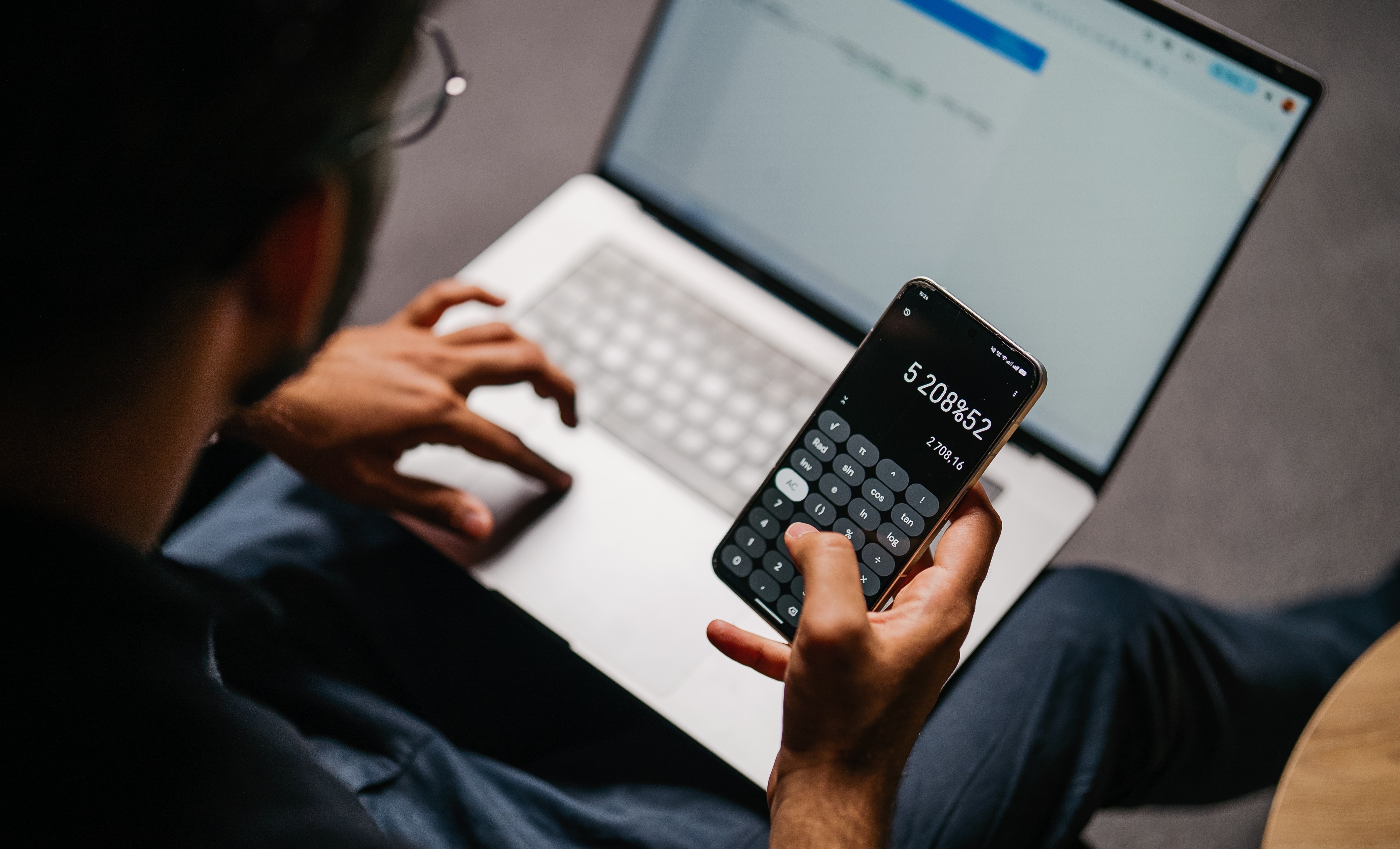
In standard employment, the main practical point is this: your salary is usually shown as gross salary, tax is deducted from it, and the amount you receive is lower because of those deductions and other contributions. This might be a surprise at first. The number in the contract is not the same as the amount that arrives in the bank account.

If You Are Self-Employed
If you freelance or run a business, taxes usually become much more hands-on. You need to deal with: registration, keeping records, submitting a tax return (tax return can also be applicable in specific cases while employed), and understanding what you need to pay yourself and when. This is one of the biggest practical differences between employment and self-employment in Czechia.
What About a Tax Return?
Not everyone needs to think about a tax return in the same way. For many standard employees, most tax matters are handled through the employer. But a tax return may become more relevant if:
- you are self-employed,
- you have more than one type of income,
- you worked for more than one employer,
- you had foreign income,
- or your financial situation is more complex than one standard job.
This matters especially if you move between countries, combine Czech and foreign income, freelance on the side, or are not sure how your work was taxed.
This is one of the areas where it is worth asking early (you can ask at your HR department) rather than assuming everything is automatically solved.
What to keep in order?
Financial paperwork does not need to take over your life. But some documents are worth keeping organised from the start. Useful documents to keep:
- employment contracts,
- payslips,
- bank statements when relevant,
- tax-related forms,
- confirmations of income,
- loan or mortgage documents,
- and any official communication related to financial obligations.
These become especially useful later if you change jobs, apply for a mortgage, deal with residence matters or need to explain your income history.
Practical Tips
- If you are opening a bank account, compare more than just monthly fees.
- If you still receive or send money abroad, foreign exchange conditions can matter a lot.
- Keep your first payslip and check it properly.
- Do not assume gross salary is what you will receive.
- If your income comes from more than one source, pay more attention to tax questions.
- If you freelance, do not leave tax matters until the last minute.
- Keep financial documents organised from the start.
- If you are thinking about a mortgage later, build stable financial habits early.
- If something seems unclear, ask before you sign, not after.
- For complex situations, use this page as a guide, but verify the details with a bank, accountant, tax adviser, or official source.
FAQs

What do I usually need to open a bank account? Info
This depends on the bank, but to open a bank account you usually proof of identity is required, and sometimes also proof of address, work, study, or legal stay.
Can international alumni get a mortgage in Czechia? Info
In some cases, yes. But banks often look closely at income stability, residence status, savings, and the overall financial picture.
Are loans easy to get as an international graduate? Info
It depends on your income, contract type, residence situation, and financial history in Czechia. Conditions can vary from case to case, but banks tend to look into your reliability based on your financial history and do not have to grant you a loan.
What to do if I am not confident about my tax situation? Info
For tax return or specific / more complex situations, it is best to verify the details with a professional. You can reach out to an accountant or tax adviser.